Wordsworth & Alain de Botton
- Jul 22, 2012
- 1 min read
Is nature a necessary antidote to the evils of expanding cities as most people thought by the death of Wordsworth in 1850? Alain de Botton has suggested that part of Wordsworth’s complaint was directed toward the smoke, congestion, poverty and ugliness of cities. “But that clean air bills and slum clearance would not by themselves have eradicated Wordsworth’s critique. For it was the effect of cities on our souls, rather than our health that concerned him” (The Art of Travel, p 138). City dwellers “had a relentless desire for new things, which they did not genuinely lack and on which happiness did not depend” wrote Wordsworth and we can still see such wastefulness and unhappiness today; with shopping the new religion and over packaged, over sold and carelessly discarded unnecessaries quickly passed to landfill or disposed on the fly around the edges of all our towns.
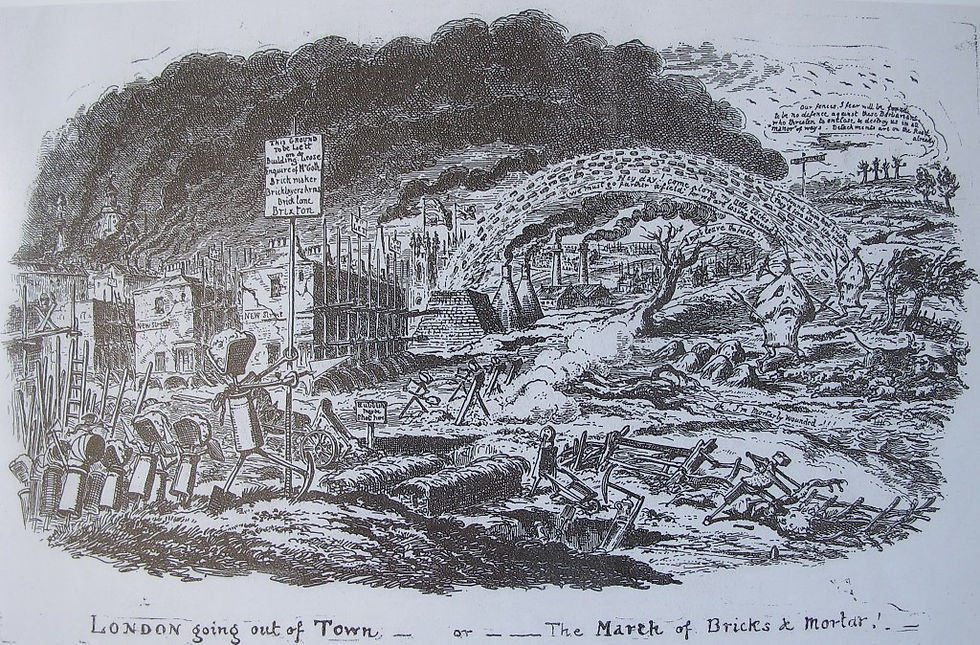
Cruickshank in 1829 depicted a battle zone where the (foreground) tipping of rubbish from a barrow onto virgin fields was only a minor skirmish in a greater battle for profit waged by unbridled and unprincipled capitalism. What might I find to have changed in the urban fringes of Medway and Swale 183 years on, where evidence of post-industrial retreat is woven into the narrative of 19th Century growth.


Comments